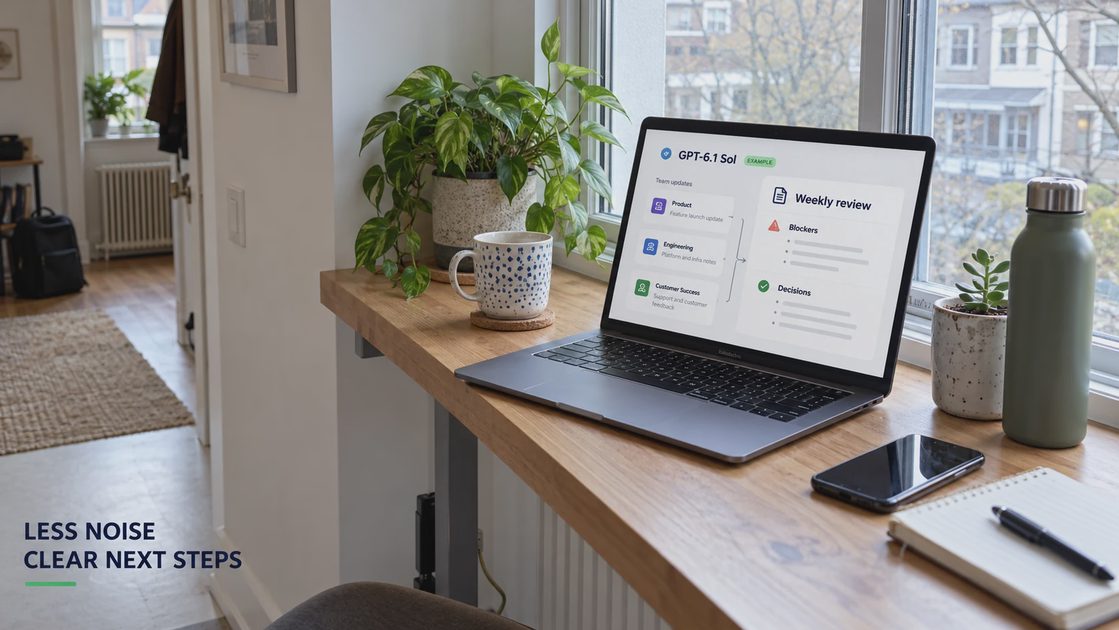
Using GPT-6.1 Sol to organize three departments' weekly updates cut my report-compilation time by more than half, by my rough recollection. The useful change was defining what my direct supervisor needed to know: exceptions, blockers, and decisions. My ChatGPT weekly review became easier to use once those criteria determined what stayed in the report.
The inputs had been difficult in opposite ways. Long submissions buried important developments beneath routine activity. Short ones relied on abbreviations that made sense only to the department writing them. Simply asking for a shorter summary did not solve either problem.
Below is the repeatable version I would use for this kind of review, including a small constructed example so you can inspect the selection rules. The prompts and sample records illustrate the method; they are not a transcript of my original report. Images are editorial illustrations, not original work records.
Give the review a reader and a boundary
My reader was my direct supervisor. That makes the task different from writing a company-wide executive summary or doing a personal reflection on everything accomplished that week.
I want the review to help my supervisor see what changed, where progress is blocked, and where their decision would make a difference. I still need enough context to explain an issue. Removing routine activity should not remove the background that makes a blocker understandable.
For a reusable version, I would begin with these instructions before adding any departmental material:
Prepare a weekly work review for my direct supervisor. Focus on material exceptions, blocked work, and decisions requiring attention. Keep supporting context that changes the interpretation. Do not invent business impact, causes, owners, dates, or commitments.
That boundary also protects the wording. In another reporting attempt, a change to cheaper packing tape became inflated language about supply-chain resilience. I want ordinary changes described plainly. Without evidence of a meaningful effect, they do not become management-level achievements.
Why I use GPT-6.1 Sol for this task
This job combines uneven source documents, audience-specific selection, and a constrained written output. I use GPT-6.1 Sol because that is a reasonable fit for the synthesis involved. I would not switch to a more demanding model merely because one department submitted a long document.
OpenAI positions GPT-6.1 Sol for complex professional work, and its Work and Codex guidance distinguishes that model's availability from regular Chat conversations. For this workflow, select Sol in an eligible Work environment or use an appropriately configured API setup; check the options your account actually provides.
My first pass would use only the supplied reports. Live web research usually cannot settle an internal department's missing deadline or explain an unfamiliar abbreviation. Those gaps belong in a question list for the people who supplied the information.
I would also begin manually. A scheduled system can wait until I know which records the review needs and which mistakes deserve checking. Automatically producing a weak report every week would only make the weakness repeatable.
Prepare source labels before asking for a summary
I would put the reporting period at the top and give each department's update a clear label. Where practical, I would number paragraphs or items so a claim can point back to a particular entry.
Then I would separate current updates from older context. A copied note is not necessarily evidence that a problem remains open. If the input does not establish whether an issue was resolved, I want Sol to mark the status as unclear rather than silently carrying it forward.
Abbreviations need similar care. I would provide a short glossary for terms I know and leave unfamiliar ones unresolved. A plausible expansion can change the meaning of a short operational update.
Use workplace information only in an approved environment. A nonsensitive sample is sufficient to establish the structure before bringing actual departmental records into the process.
Extract the evidence, then decide what belongs
I would ask Sol for an evidence list before asking it to write the polished review. Each retained item should carry its source, the reported situation, and any missing information. That gives me something to compare with the inputs before editing the language.
For example, imagine these invented updates from a single reporting period:
Source | Supplied update |
|---|---|
Warehouse, item W1 | Twelve shipments are delayed. Four of those are waiting for address confirmation. No follow-up owner is named. |
Warehouse, item W2 | Packing tape was replaced. No service or cost effect is documented. |
Support, item S1 | Six refund cases are waiting for shipment confirmation. No deadline or owner is stated. |
Finance, item F1 | Reconciliation is complete. One refund amount still needs review. |
For my supervisor, the resulting selection should look like this:
Retain W1: twelve delayed shipments, including four awaiting address confirmation. Ownership needs confirmation.
Omit W2 from the main review: keep it in the source record, but do not invent a significant business effect.
Retain S1: six refund cases await shipment confirmation; owner and deadline are unstated.
Retain the exception in F1: reconciliation is complete, but a refund amount remains under review.
The four shipments are part of the twelve, not an additional group. The six refund cases may overlap the delayed shipments, but the example does not establish that relationship. I would not let the review combine those figures into a single total.
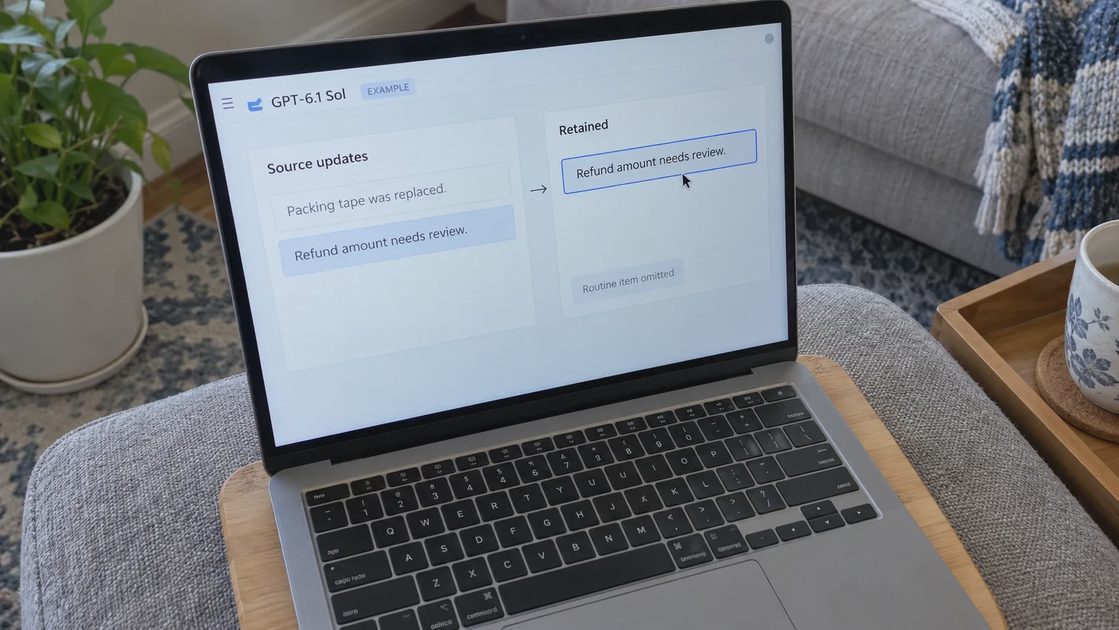
This is where a ChatGPT weekly report needs more than fluent summarization. The selection must preserve uncertainty and numerical relationships while removing information that does not help the reader act.
A weekly review prompt you can adapt
Here is the instruction I would use after labeling the inputs. Replace the reporting period and add your sources beneath it.
Use GPT-6.1 Sol to review only the supplied updates.
Reader: my direct supervisor.
Period: [reporting period].

First return an evidence list:
- Source label and item ID
- Reported fact or exception
- Blocker, if explicitly stated
- Missing or conflicting information

Then draft a concise weekly status report with:
1. Material changes and exceptions
2. Blocked work
3. Decisions or clarification needed
4. Proposed follow-ups for next week

Retain source IDs for every substantive item.
Preserve qualifiers, subsets, exceptions, and disputed facts.
Do not infer blame, owners, deadlines, savings, or business impact.
Keep proposed follow-ups separate from confirmed commitments.
List omitted routine items separately for my review.
Do not send messages or modify external systems.
This weekly review template has two outputs for a reason. The evidence list helps me check accuracy; the weekly status report helps my supervisor understand what needs attention. I would shorten the second output after checking the first.
A suggested follow-up should stay a suggestion. “Confirm who owns address verification” is a reasonable next action for the example. “The warehouse manager will resolve it by Monday” adds a person and a deadline the source never supplied.
Check the omissions before the sentences
My first review question would be what disappeared. Shortening is useful only when the removed material does not change a retained item's meaning.
I would compare the omitted-items list with the original updates, then inspect every number, ownership statement, and decision request in the draft. I would check that “complete” does not hide an unresolved exception and that a request for clarification has not become an assignment.
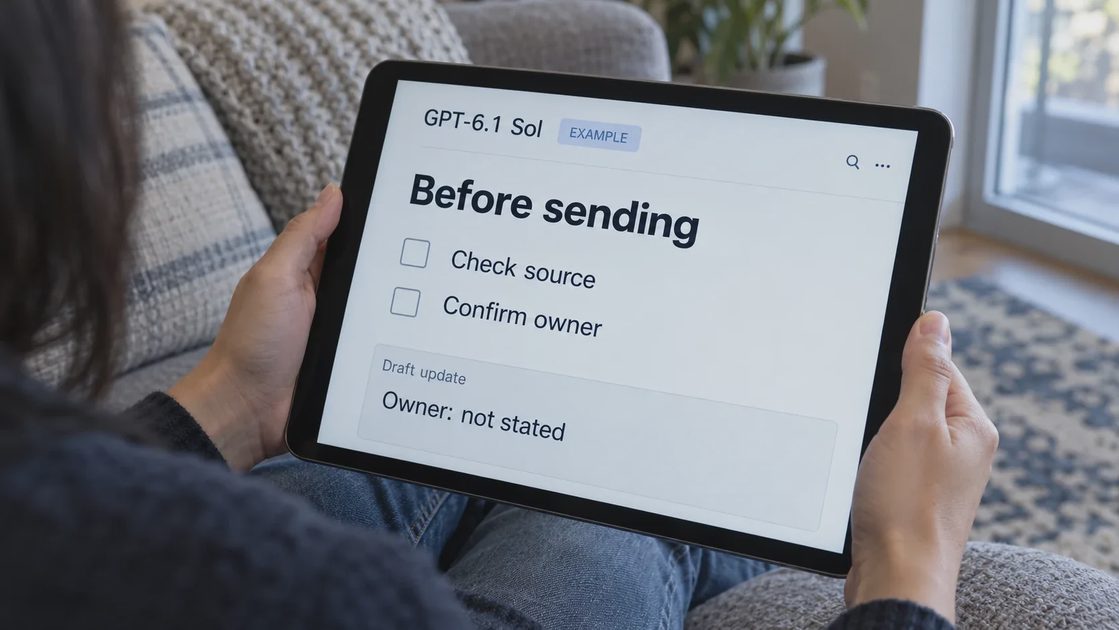
Before sending, I would remove anything my supervisor does not need from the visible source references while keeping enough traceability to answer a follow-up. In a small report, a short source label may be sufficient. More complex material may need the original item ID.
An AI weekly review still costs preparation and checking time. My remembered improvement is not a promise that this exact prompt will halve your workload. If the evidence list takes longer to repair than the original report takes to write, I would simplify the inputs or stop using the workflow.
Let the report guide next week's work
The last step is a weekly work review for me: which unresolved item needs clarification, what requires my supervisor's decision, and what I can actually follow up on next week. I would carry forward the next action rather than copying an old paragraph indefinitely.
That is the standard I want from ChatGPT prompts for work: a usable result with the remaining uncertainty visible. Try the small example above first. Check whether the four shipments remain inside the twelve, the missing owners stay missing, and the refund exception survives the sentence about completed reconciliation.

No letters yet — be the first to write.